Circuits Built to Support Modern Power Demands
Panel Upgrades in Lyman for homes with overloaded circuits, insufficient breaker space, or aging electrical distribution equipment
Laprise Electrical provides panel upgrades in Lyman and throughout Southern Maine for homes where existing electrical distribution no longer supports modern appliances, heating systems, or planned additions. An undersized or outdated panel limits how much power your home can safely distribute, often causing breakers to trip repeatedly, limiting installation options for new equipment, and increasing fire risk from overloaded circuits. Panel replacement establishes a foundation for safe electrical distribution and accommodates future power needs without compromising existing circuits.
Panel upgrades involve removing the old panel, installing a new panel with adequate breaker capacity, reconnecting all existing circuits to properly rated breakers, and verifying that the service entrance can handle the upgraded load. The process includes evaluating whether the main service line from the utility requires upgrading, determining the appropriate amperage rating for the new panel, and ensuring all connections meet current electrical code requirements. This work directly addresses situations where you've run out of breaker slots, where circuits trip frequently despite normal use, or where inspectors have flagged outdated equipment during home evaluations.
Schedule a panel inspection to evaluate existing capacity and determine upgrade requirements for your property.
Why Undersized Panels Limit Electrical Safety and Capacity
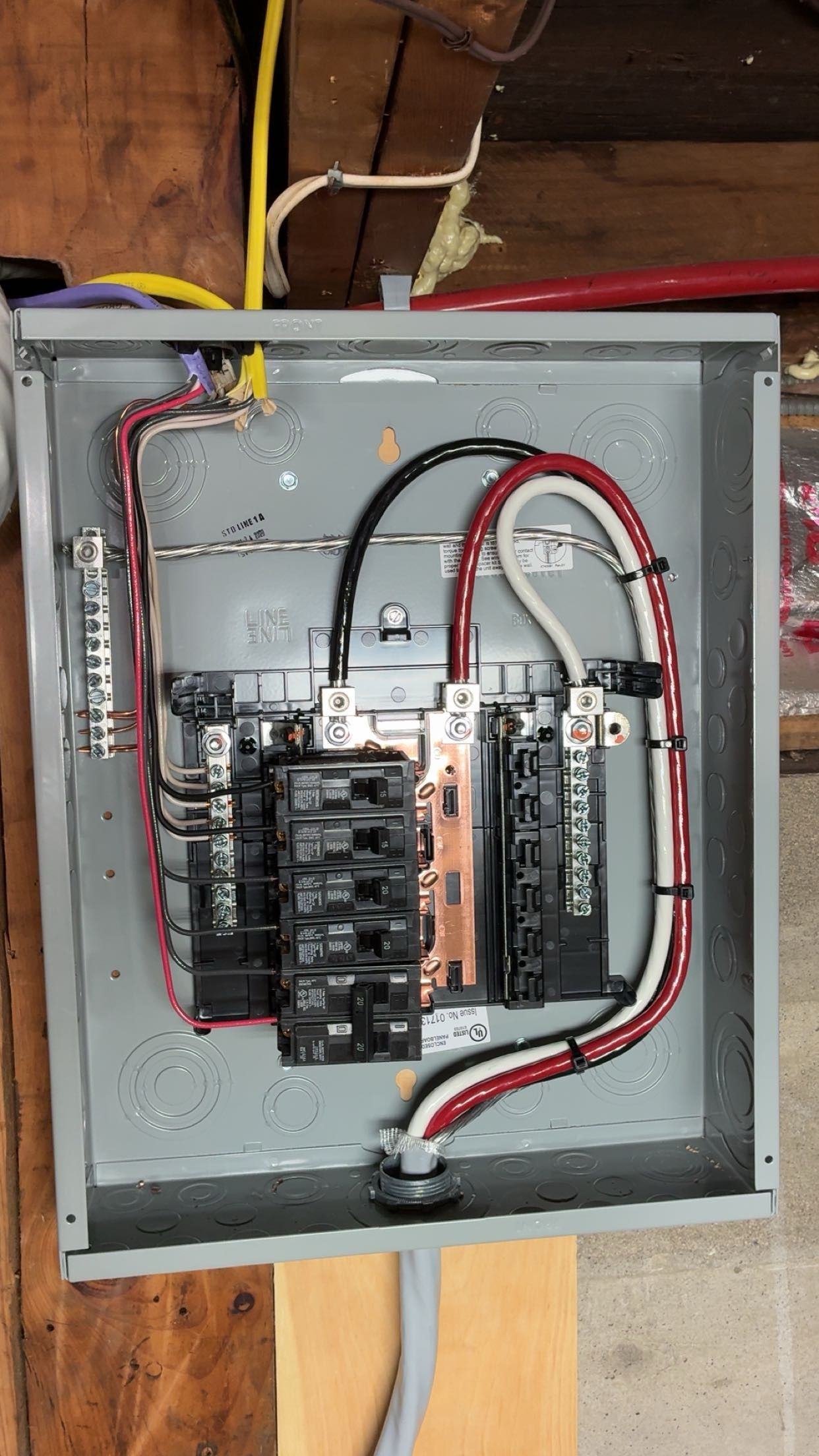
An electrical panel distributes power from the utility connection to individual circuits throughout your home, with each circuit protected by a breaker that trips when demand exceeds safe levels. When a panel lacks sufficient breaker slots, homeowners often resort to tandem breakers that overload the panel's bus bars, or they skip adding necessary circuits altogether. Laprise Electrical evaluates the existing panel configuration, identifies whether the main service amperage supports modern household loads, and replaces panels that no longer provide safe or adequate electrical distribution.
After a panel upgrade, you'll notice that breakers stop tripping during normal appliance use, you gain the ability to add dedicated circuits for high-demand equipment like heat pumps or EV chargers, and inspections no longer flag outdated or overfilled panel configurations. The new panel provides clearly labeled breaker positions, proper spacing for future additions, and a main disconnect rated for the actual service amperage your home receives.
Panel upgrades often involve coordinating with the utility company if the main service line requires replacement, which adds time to the project but ensures the entire electrical pathway from the street to the panel operates within safe capacity limits. In some cases, upgrading from 100-amp to 200-amp service requires replacing the meter base and upgrading the service entrance conductors, not just swapping the panel itself.
Questions About Upgrading Your Electrical Panel
Homes built before widespread adoption of central air conditioning, electric heating, and modern kitchen appliances often operate on electrical infrastructure that wasn't designed for today's power demands.
What warning signs indicate a panel needs replacement?
Breakers that trip frequently without obvious overloads, a panel that feels warm to the touch, scorch marks around breaker connections, or a panel with no available slots for additional circuits all indicate that replacement should be evaluated. Panels manufactured by certain brands known for defects or recalls also warrant immediate inspection regardless of visible symptoms.
How is the appropriate panel size determined for a home?
The calculation considers the total square footage, existing appliance loads, heating and cooling equipment, planned additions like EV chargers or workshop equipment, and whether the home uses electric water heating or cooking. Most modern homes benefit from 200-amp service, though smaller properties with gas appliances may function adequately with 150-amp panels.
What happens to existing circuits during a panel upgrade?
Each existing circuit is disconnected from the old panel, labeled for identification, reconnected to an appropriately rated breaker in the new panel, and tested to verify proper operation. The process does require temporarily de-energizing the home, typically for several hours during the installation.
When should homeowners in Lyman consider upgrading their electrical panel?
Before adding high-demand equipment like heat pumps, before finishing basements or adding rooms that require new circuits, when planning an EV charger installation, or when home inspections identify outdated panels during property transactions. Southern Maine's shift toward electric heating in recent years has increased the frequency of panel upgrades for homes originally built with oil or propane systems.
What does a panel upgrade include beyond the panel itself?
The work includes the new panel enclosure, all necessary breakers, reconnection of existing circuits, grounding and bonding connections, weatherhead replacement if the service entrance is damaged, and coordination with the utility company if the meter or service line requires upgrading. Some municipalities require separate permits and inspections for panel replacement work.
Laprise Electrical works with a variety of panel manufacturers and configurations to match the specific requirements of your existing electrical system and planned improvements. Request a consultation to review your current panel capacity and determine the appropriate upgrade path for your home.